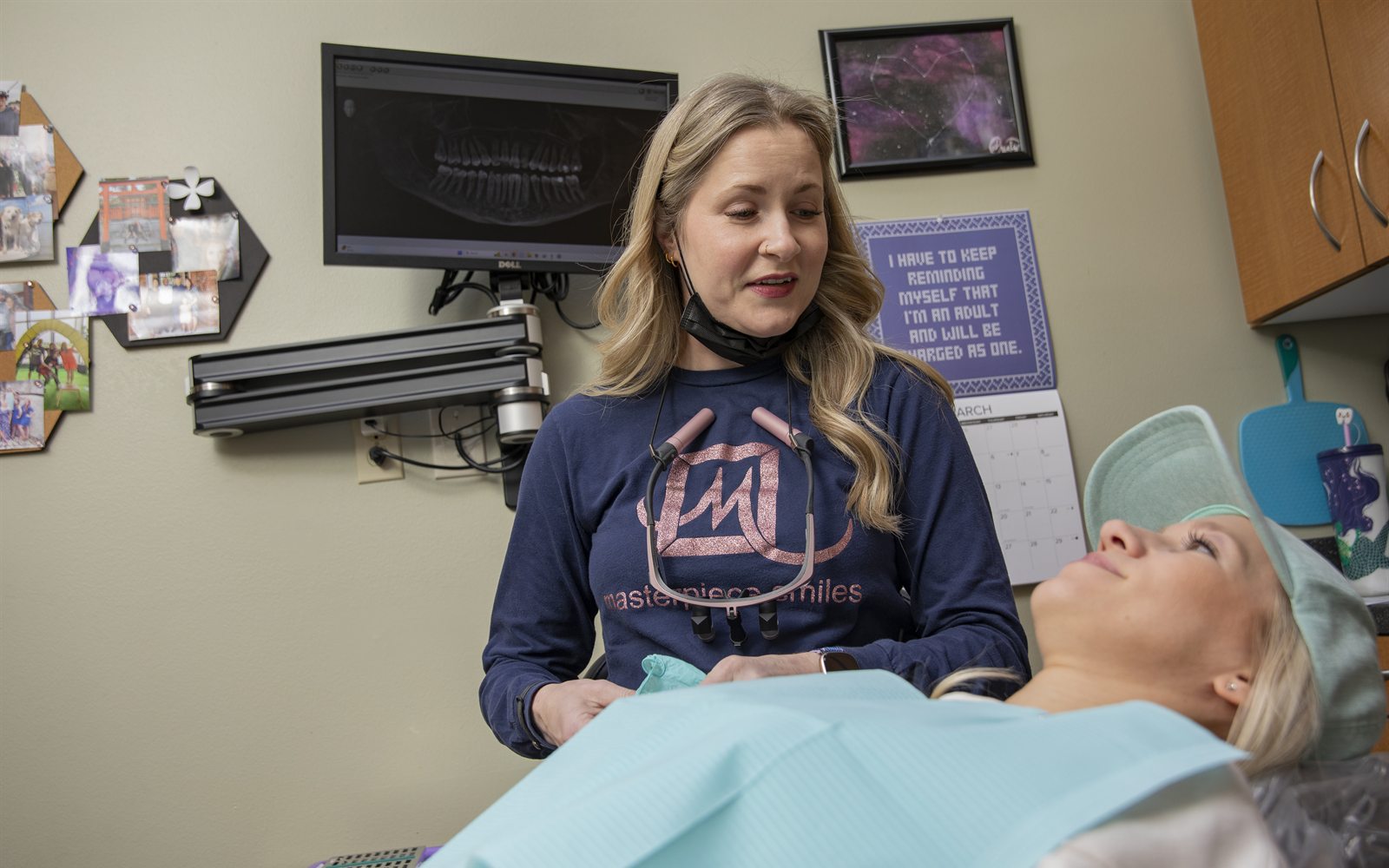
Dr. Bryce Baumann, DDS, general dentist at Masterpiece Smiles
Laughing gas, or nitrous oxide, is a light form of sedation at the dentist. You breathe it through a small mask over your nose, you stay awake, and most people feel calmer within a few minutes. When the gas is turned off, it clears quickly.
At Masterpiece Smiles in Oklahoma City, it’s one of four sedation options we offer. As Dr. Bryce Baumann puts it, laughing gas “helps people relax a little bit, take the edge off, not care as much.” Here’s what to expect, for you or for your child.
How Laughing Gas Works
Nitrous oxide is given mixed with oxygen. Dental equipment typically limits the nitrous to 70 percent, so you’re breathing more oxygen than you would in room air, and the gas works faster than other inhaled sedatives and leaves your body quickly (American Dental Association).
The dentist adjusts the dose during the visit (Cleveland Clinic). At the end, you breathe pure oxygen for a few minutes to clear the rest (American Dental Association).
What Laughing Gas Feels Like
Most people describe a calm, light feeling. Some feel dreamy, floaty, warm or tingly in their hands and feet (Royal Children’s Hospital). You stay awake, you can talk, and you can tell us if you need a break.
It doesn’t put you to sleep, and it isn’t meant to. If you want to sleep through a visit, our sedation options page compares laughing gas with oral sedation, IV sedation and general anesthesia.
Does It Help With Pain?
Laughing gas eases discomfort and anxiety, but it doesn’t numb the tooth. When a tooth needs numbing, local anesthetic is still used alongside it, and many people find the whole visit easier to sit through when they’re relaxed.
If the shot itself is what you dread, there’s another option for some cavities: our Cavity Laser treats them with no shot and no drill.
After the Visit
Recovery is quick. Once the gas is off and you’ve breathed oxygen for a few minutes, most people feel back to normal within 15 to 30 minutes (Cleveland Clinic). Cleveland Clinic notes that people can usually drive after laughing gas alone, unlike oral or IV sedation, but ask us before your visit whether you can, especially if laughing gas will be combined with another sedative.
Laughing Gas for Children
Laughing gas is a common way to help a nervous child through a dental visit. The child stays awake and can follow simple instructions, and children usually recover very quickly once the treatment is done (Royal Children’s Hospital).
A few things help on the day:
- Follow the eating and drinking instructions we give you before the visit. A light meal a couple of hours ahead is common advice (Royal Children’s Hospital), but your child’s plan comes from us.
- Tell your child they’ll wear a small “nose mask” and might feel warm, floaty or giggly.
- Some children feel a little queasy afterward. Offering some water can help (Royal Children’s Hospital).
For a child with autism or sensory needs, our page on special needs dental care for children covers how we plan the whole visit, not just the sedation.
Is Laughing Gas Right for You?
Laughing gas takes the edge off, so it suits people whose nerves make a visit hard but not impossible. It can also ease a strong gag reflex (a 2023 review). If your nerves are severe, we’ll talk through oral or IV sedation with you.
Before any sedation, tell us about your health history and the medicines you take, so we can make sure laughing gas is right for you.
What Laughing Gas Costs
We don’t publish prices, because the cost depends on your visit and your insurance. Some plans cover sedation when it’s medically necessary; others don’t. Call us and we’ll help you check your coverage, and financing is available.
Laughing Gas Questions, Answered
Does laughing gas make you sleepy?
It makes you relaxed and a little drowsy, but you stay awake and can talk the whole time. At Masterpiece Smiles, patients who want to sleep through a visit usually look at IV sedation instead.
Can you still feel pain with laughing gas?
Laughing gas eases discomfort and anxiety, but it doesn’t numb the tooth. At Masterpiece Smiles, local anesthetic is still used when a tooth needs numbing, and laughing gas helps you stay relaxed while it’s given.
How long does laughing gas take to wear off?
Not long. Once the gas is turned off, breathing pure oxygen clears it quickly, and most people feel back to normal within 15 to 30 minutes.
Can you drive after laughing gas?
Often, yes, because laughing gas clears quickly, and Cleveland Clinic notes people can usually drive after it. Ask Masterpiece Smiles before your visit whether you can, especially if laughing gas is combined with another sedative.
Is laughing gas OK for kids at the dentist?
For most children, yes. Laughing gas is widely used to help children through dental visits, and children usually recover very quickly once treatment is done. Masterpiece Smiles will go over your child’s health history with you first.
Can a child go back to school after laughing gas?
The effects usually wear off quickly, and children tend to recover very quickly once treatment is done. Ask Masterpiece Smiles before the visit if you’re planning around school.
Talk With Us
If nerves have kept you or your child away from the dentist, laughing gas is often a good place to start. Call (405) 840-4544 or schedule a phone consultation, and we’ll talk through what fits.
This page is for information only and is not medical advice; consult the practice about your own situation.
Care at Masterpiece Smiles is provided by our general dentists: Dr. Ashley Lanman, DDS, Dr. Kristie B. Haller, DDS, Dr. Bryce Baumann, DDS, and Dr. Carmen Martinez, DDS.